Similes for working hard help describe the effort, energy, and determination someone puts into a task. Expressions such as “busy as a bee,” “working like a beaver,” and “working like a machine” make writing more vivid and easier to understand. They can show whether someone stays busy, works carefully, or keeps going through a difficult challenge.
You can use these comparisons in school essays, stories, workplace conversations, speeches, and everyday English. The right simile adds meaning to your sentence without making it sound unnatural. Below, you will find common expressions, simple definitions, practical examples, and tips for choosing the best comparison for each situation.
Test Your Vocabulary Instantly
100+ commonly confused English words, instant right/wrong feedback — see your score in minutes.
What Are Similes for Working Hard?
Similes for working hard compare a person’s effort with something familiar, such as a busy bee, a hardworking animal, or a person completing a long journey. These comparisons help readers imagine the kind of work someone does instead of simply hearing that the person works hard.
How Do Similes Describe Hard Work?
A simile uses words such as “like” or “as” to compare two different things. For example, “She was as busy as a bee” describes someone who stays active and handles many tasks. The person is not literally a bee; the comparison helps readers picture her busy schedule.
Compare these sentences:
- Simple: Ahmed worked hard all afternoon.
- With a simile: Ahmed worked like a beaver, making steady progress on his project all afternoon.
The second sentence gives a clearer picture of Ahmed’s effort. Similes for working hard can describe speed, patience, physical effort, concentration, teamwork, or determination. Choose a comparison that matches the quality you want to emphasize.

Common Similes for Working Hard
Some expressions are familiar in everyday English, while others work better as creative comparisons. These similes for working hard can help you describe busy people, productive workers, and individuals who keep trying even when a task becomes difficult.
1. Busy as a Bee
Meaning: This simile describes someone who stays active and has many tasks to complete. It often creates a cheerful, positive impression.
Example: “My mother was as busy as a bee, preparing dinner while helping my brother with his homework.”
Use this expression when someone moves from one responsibility to another without wasting much time. It fits everyday conversations, personal stories, and informal writing.
2. Working Like a Beaver
Meaning: Working like a beaver suggests steady, practical effort. It creates an image of someone who keeps building, preparing, or making progress.
Example: “The volunteers worked like beavers to repair the community garden before the weekend.”
Among similes for working hard, this one suits people who produce visible results through continuous activity. You can use it when describing a team preparing an event or a student organizing a large assignment.
3. Working Like a Machine
Meaning: This comparison describes someone who works quickly, consistently, and efficiently. Depending on the situation, it can also suggest that the person needs a break.
Example: “Ayesha worked like a machine during the final week of the project, organizing files and completing reports on time.”
Use this simile when productivity and consistency matter most. Avoid it when you want to highlight creativity, personal connection, or thoughtful decision-making rather than output.
4. Working Like a Horse
Meaning: Working like a horse describes someone who performs a great deal of demanding work, often involving physical effort or long hours.
Example: “The farm workers worked like horses to bring in the harvest before the rain arrived.”
This expression can show admiration for someone’s effort, but it may also suggest a heavy workload. Consider the context before using it to praise an employee who already faces too many responsibilities.
5. Working Like a Dog
Meaning: This informal expression means working extremely hard, often under tiring or difficult conditions.
Example: “He worked like a dog all week to save enough money for his college fees.”
This is one of the more forceful similes for working hard because it can communicate exhaustion as well as dedication. It works well in personal conversations and informal stories, but it may sound too casual in a formal report.
6. Working Like a Trooper
Meaning: Working like a trooper describes someone who continues making an effort despite difficulties, setbacks, or tiredness.
Example: “Even after several technical problems, the team worked like troopers to finish the presentation.”
Choose this expression when persistence matters more than speed. It is useful for describing employees, students, volunteers, or friends who remain committed when circumstances become challenging.
7. Working Like a Busy Ant
Meaning: This creative comparison describes someone who completes many small tasks through steady effort. Ants often represent industry, cooperation, and persistence.
Example: “Sam worked like a busy ant, sorting books and arranging every shelf before the library reopened.”
This simile is useful when someone makes progress through repeated, practical actions. It can also describe a group working together toward a common goal.
8. Working Like a Steam Engine
Meaning: A steam engine suggests power, movement, and sustained energy. This comparison describes someone who approaches a task with strong momentum.
Example: “Once the competition began, Bilal worked like a steam engine, solving one problem after another.”
Use this expression when someone tackles demanding work energetically. It is particularly suitable for a busy project, an intense study session, or a challenging workday.
9. Working Like a Well-Oiled Machine
Meaning: This expression describes a person or team that works smoothly, efficiently, and with few delays.
Example: “After several weeks of practice, the event team worked like a well-oiled machine.”
Unlike similes that emphasize physical effort, this comparison focuses on coordination and organization. It is especially useful when team members understand their roles and cooperate effectively.
10. Working Like a Beehive
Meaning: A beehive represents a place filled with activity. This comparison usually describes a busy environment rather than one person’s effort.
Example: “The school office was like a beehive as teachers prepared the examination papers.”
Use this expression when many people are working at the same time. It helps readers imagine a lively room where everyone has something to do.
11. Working Like a Champion
Meaning: This comparison suggests determination, confidence, and impressive effort.
Example: “Despite feeling nervous, Sana worked like a champion to complete her science project.”
It has an encouraging tone and fits motivational writing, friendly conversations, and messages praising someone’s achievement. Among similes for working hard, it is particularly useful when you want to recognize someone’s commitment positively.
12. Working Like a Whirlwind
Meaning: Working like a whirlwind describes someone who completes many tasks rapidly and creates a sense of intense activity.
Example: “Before the guests arrived, Dad worked like a whirlwind, cleaning the living room and setting the table.”
This simile emphasizes speed, but it may also suggest hurried or slightly chaotic activity. Choose it when someone is moving quickly through a long list of jobs rather than completing slow, careful work.
13. Working Like a Clock
Meaning: This comparison suggests regularity, reliability, and a consistent routine.
Example: “Every morning, the caretaker worked like a clock, opening the school gates and preparing the classrooms before students arrived.”
Use this expression when punctuality and routine matter. If you want to emphasize how a whole group works together smoothly, “like a well-oiled machine” may communicate the idea more clearly.
Similes for Working Hard Under Pressure
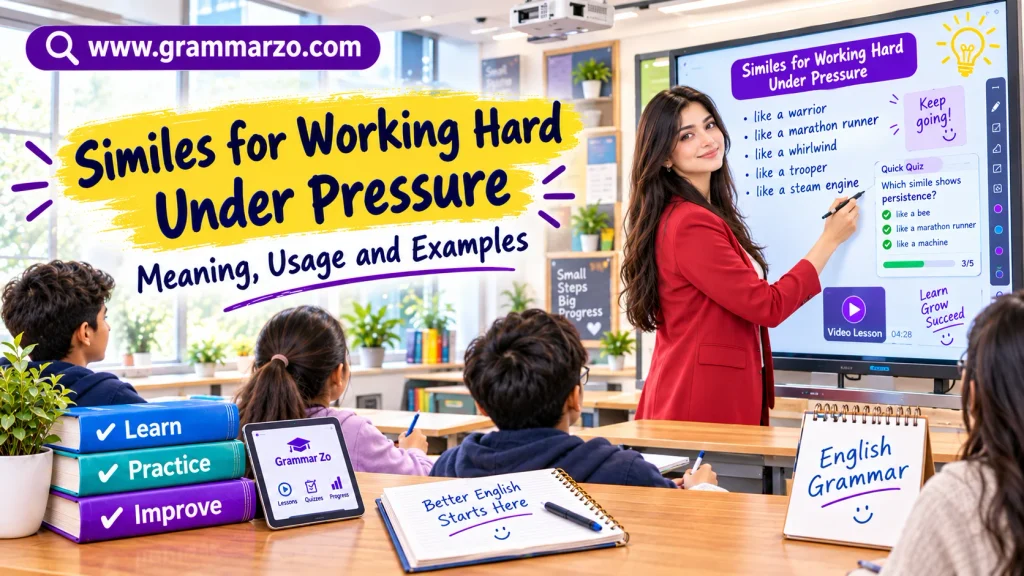
Hard work sometimes involves tight deadlines, unexpected problems, and long hours. Similes for working hard under pressure help explain how someone responds when a task becomes difficult or time is running out.
14. Working Like There’s No Tomorrow
Meaning: This informal expression describes someone who works with extreme urgency or intensity, as though time is running out.
Example: “With the deadline only hours away, the students worked like there was no tomorrow.”
The expression adds drama to a story and communicates urgency. However, it can also suggest overwork, so use it when you want to describe an intense situation rather than a healthy long-term routine.
15. Working Like a Warrior
Meaning: A warrior represents courage and determination when facing challenges. This creative comparison describes someone who approaches difficult work with a strong mindset.
Example: “She worked like a warrior to rebuild her small business after the unexpected setback.”
This expression suits motivational writing, personal stories, and speeches about resilience. It emphasizes the willingness to face obstacles rather than simply completing tasks quickly.
16. Working Like a Marathon Runner
Meaning: A marathon runner must maintain effort over a long distance. This simile represents endurance, patience, and steady progress toward a distant goal.
Example: “Nida worked like a marathon runner, completing a little of her research paper every evening.”
This is one of the most useful similes for working hard on long-term projects. It suits examination preparation, research, business planning, and learning a difficult skill because these activities require consistent effort over time.
Creative Similes for Working Hard
Familiar expressions work well in everyday conversation, but creative comparisons can make a story or essay more memorable. The following similes for working hard use images from nature, art, and everyday life to describe patience and determination.
17. Working Like a River Cutting Through Stone
Meaning: This original comparison describes continuous effort that gradually overcomes a difficult obstacle.
Example: “She worked like a river cutting through stone, practicing difficult piano pieces until she could play them confidently.”
The image shows how small efforts can produce progress over time. Use it in descriptive essays, personal stories, or writing about someone who refuses to give up.
18. Working Like a Sculptor Shaping Clay
Meaning: This simile emphasizes patience, skill, and attention to detail. A sculptor gradually shapes a material through careful adjustments.
Example: “The editor worked like a sculptor shaping clay, removing unnecessary words until every paragraph became clear.”
Choose this comparison when someone improves a piece of work through repeated refinement. It fits writing, design, art, editing, and other tasks that require precision.
19. Working Like a Gardener
Meaning: A gardener tends plants regularly and waits for results. This creative comparison represents patience, care, and gradual development.
Example: “The teacher worked like a gardener, helping each student develop confidence throughout the school year.”
This expression works well when describing teaching, mentoring, and personal growth. It emphasizes the steady attention that helps people improve rather than immediate results.
20. Working Like a Mountain Climber
Meaning: A mountain climber advances toward a difficult goal one step at a time. This simile represents courage, steady progress, and determination.
Example: “She worked like a mountain climber, tackling each difficult chapter before moving to the next.”
Use it when a person faces a challenging goal and makes progress through small, manageable steps. It suits academic writing, career stories, and descriptions of personal achievement.
21. Working Like a Candle Burning at Both Ends
Meaning: This image describes someone who uses energy on several demands at once, often without enough rest.
Example: “During exam week, Omar worked like a candle burning at both ends, attending classes by day and studying late into the night.”
This comparison communicates exhaustion as well as effort. It is useful when describing an unsustainable routine, but it should not imply that a lack of rest is necessary for success.
22. Working Like a Potter Shaping Clay
Meaning: A potter carefully shapes clay through repeated movements. This comparison highlights patient, thoughtful work and gradual improvement.
Example: “The young designer worked like a potter shaping clay, adjusting every detail until the final design felt right.”
Use this creative simile when a task requires care and repeated adjustments rather than speed alone. It can make descriptions of artistic work, editing, or design more vivid.

How to Choose the Right Similes for Working Hard
The best comparison depends on what you want the reader to notice. A person may work quickly, remain patient, cooperate with others, or keep going through difficult circumstances. Selecting the right image helps you express that difference.
Match the Simile to the Type of Effort
Consider these options when choosing similes for working hard:
| Expression | Main idea | Best situation |
|---|---|---|
| Busy as a bee | Activity | Someone handling several tasks |
| Like a beaver | Productive effort | Completing practical work |
| Like a machine | Speed and consistency | Finishing tasks efficiently |
| Like a trooper | Persistence | Continuing despite problems |
| Like a marathon runner | Endurance | Long-term projects |
| Like a well-oiled machine | Teamwork | A coordinated group |
| Like a sculptor | Precision | Careful editing or design |
| Like a whirlwind | Rapid activity | Preparing before a deadline |
For example, a student who completes several small chores might be “busy as a bee,” while someone who prepares for an examination over several months might work “like a marathon runner.” Both comparisons describe effort, but they create different images.
Keep the Tone Natural
Not all similes suit every audience. “Working like a dog” is informal and may suggest hardship, whereas “working like a well-oiled machine” often fits a professional discussion. Creative comparisons such as “a river cutting through stone” are more suitable for descriptive writing than for a brief workplace update.
Avoid forcing a comparison into every sentence. If a simple phrase communicates the idea more clearly, use it. A strong simile adds meaning instead of distracting readers from the main point.
Common Mistakes When Using Similes for Working Hard
Writers sometimes choose a comparison that sounds impressive but does not accurately describe the situation. Understanding the difference between activity, productivity, endurance, and precision helps you avoid this problem.
Confusing Being Busy With Being Productive
Someone can have a full schedule without making meaningful progress. “Busy as a bee” mainly suggests activity, while “like a marathon runner” emphasizes sustained effort toward a longer-term goal.
For example, “Ali was as busy as a bee answering messages” does not tell readers whether he completed his main assignment. Choose a comparison that reflects the kind of work the person actually does.
Using Informal Expressions in Formal Writing
Expressions such as “working like a dog” and “working like there’s no tomorrow” can make a personal story lively. A formal report, however, may benefit more from a sentence such as, “The team maintained a consistent pace throughout the project.”
Consider your audience, purpose, and tone before choosing similes for working hard. The right expression should sound natural in its setting.
Repeating the Same Simile Too Often
Using “busy as a bee” several times in one paragraph makes your writing predictable. Instead, describe different qualities of effort when the situation calls for them.
For example, you might describe a student as “busy as a bee” while preparing study materials, then say she worked “like a sculptor” while carefully improving her essay. Each comparison adds a new detail.
Frequently Asked Questions
What Is a Good Simile for Someone Who Works Hard?
“Works like a beaver” is a useful choice for someone who stays productive and makes steady progress. “Works like a trooper” suits a person who continues despite difficulties, while “works like a machine” emphasizes efficiency and consistency.
What Is a Simple Simile for Hard Work for Students?
“As busy as a bee” is an easy expression for students to understand and use. For example, “I was as busy as a bee preparing for my English examination.” It describes someone who stays active while completing several tasks.
What Simile Describes Working Hard Without Giving Up?
“Working like a marathon runner” describes endurance and steady effort over time. “Working like a trooper” emphasizes determination during difficult circumstances. Choose the first for long-term goals and the second when you want to highlight persistence through immediate challenges.
What Is a Simile for Working Hard as a Team?
“Working like a well-oiled machine” describes a team whose members cooperate smoothly and complete their responsibilities efficiently. For example, “The volunteers worked like a well-oiled machine while organizing the school event.”
Can I Use Similes for Working Hard in an Essay?
Yes. Similes for working hard can make descriptive and narrative essays more engaging by helping readers picture someone’s effort. Choose an expression that matches the situation, explain your point clearly, and avoid using too many comparisons in a short passage.
What Is the Difference Between a Simile and a Metaphor for Hard Work?
A simile compares two things using words such as “like” or “as.” For example, “She worked like a machine.” A metaphor describes one thing as another without using those comparison words, such as “She was a machine during the final week of the project.” Both techniques create vivid descriptions, but they use different structures.
Final Thoughts
Similes for working hard help writers describe effort, patience, determination, and productivity in a vivid way. Familiar expressions such as “busy as a bee” work well in everyday conversations, while comparisons such as “like a marathon runner” and “like a sculptor” communicate endurance and careful attention to detail.
The best simile depends on the person, task, and tone. Use these expressions thoughtfully in essays, stories, workplace writing, and conversations to make your meaning clearer and your English more expressive.